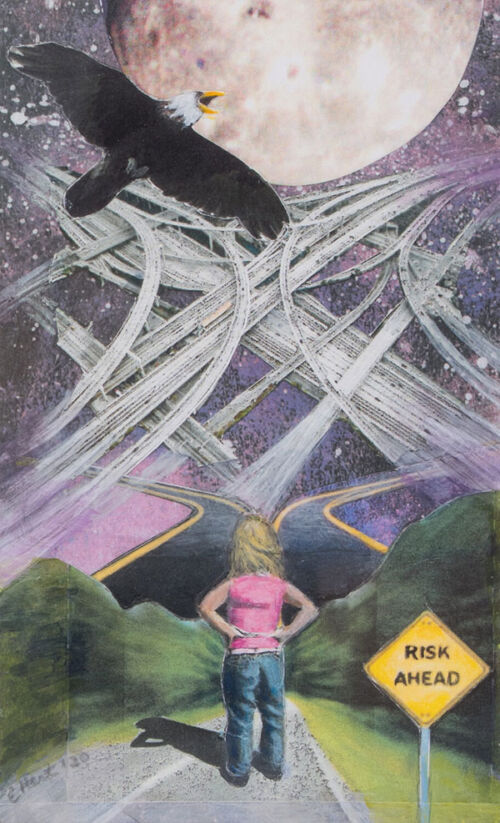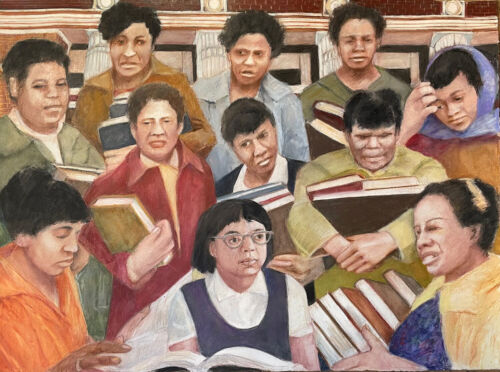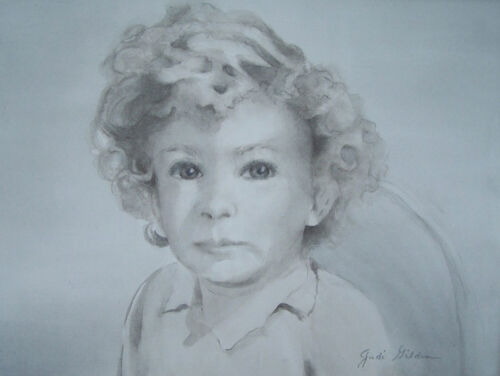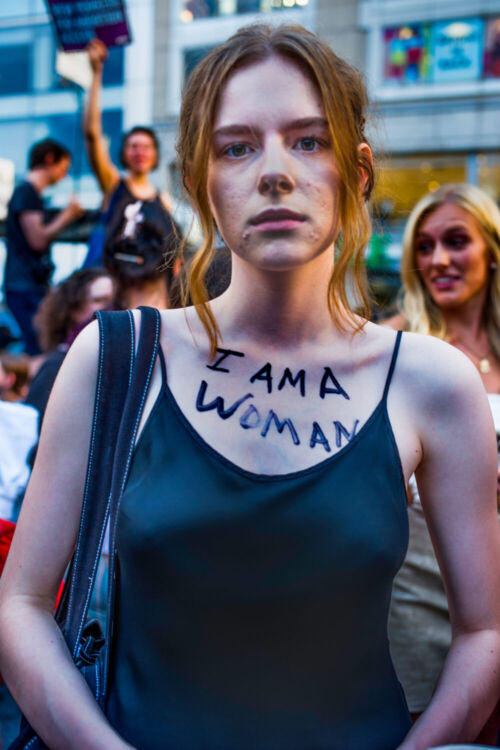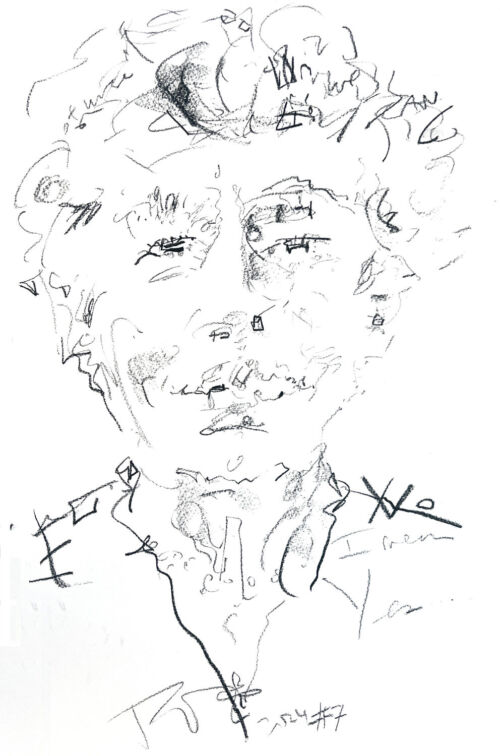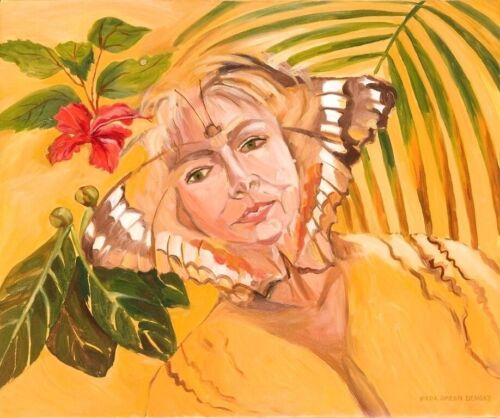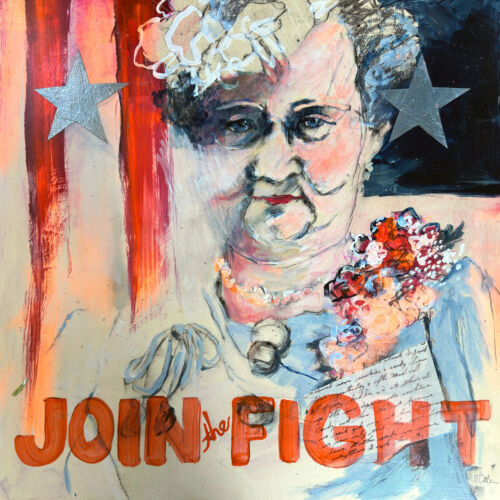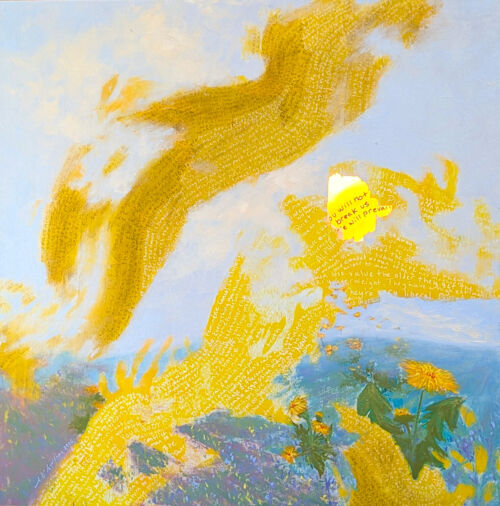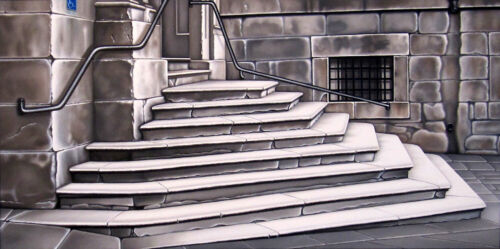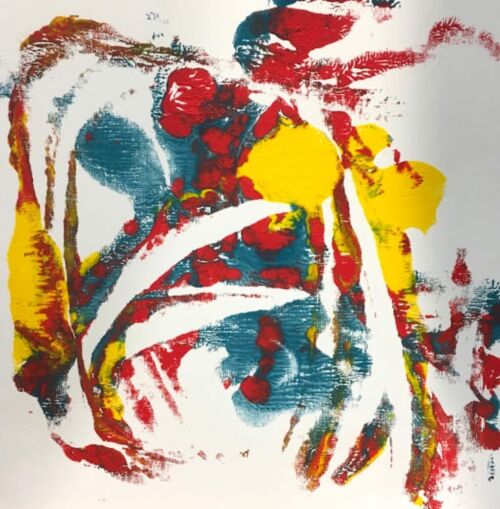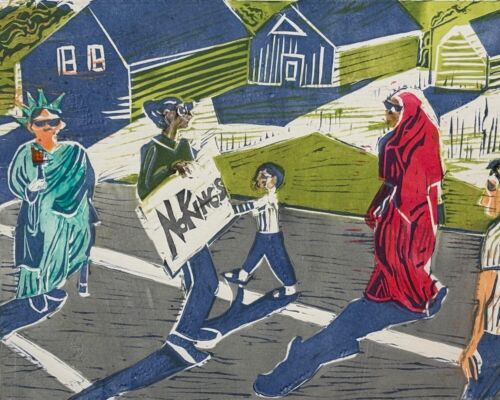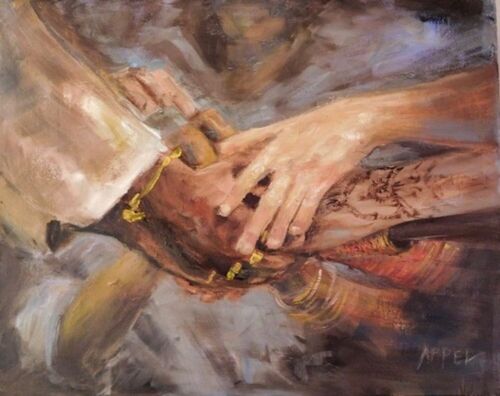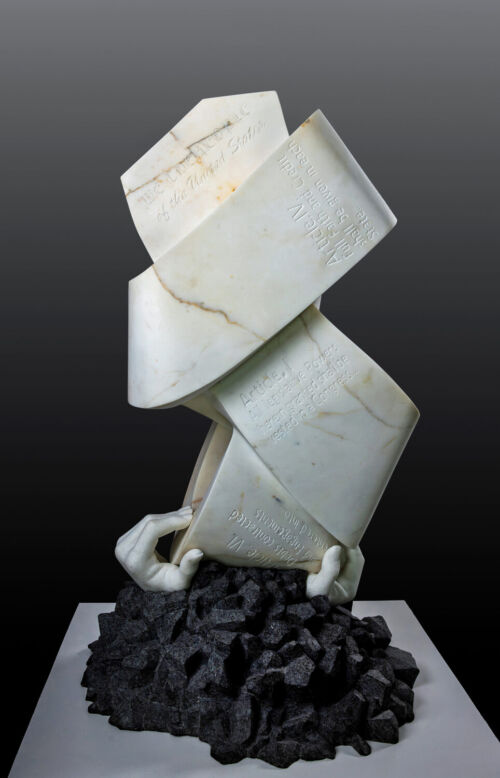

The National Association of Women Artists is the oldest existing women’s art organization in America, dedicated to honoring and celebrating the achievements of distinguished American women artists. How fitting for NAWA to mount an exhibition titled She the People, a celebration of the 250th anniversary of the Declaration of Independence.
In 1889, in a climate inspired by the fight for women’s rights and the American Women’s Club movement, Edith Mitchell Prellwitz, Adele Frances Bedell, Anita C. Ashley, and Elizabeth S. Cheever met at the studio of Grace Fitz-Randolph on Washington Square in New York City to form the Women’s Art Club. It was the first iteration of what is now the National Association of Women Artists. Prejudice against women artists and the game of power politics played by men in the art establishment plagued them, and these five women were determined to create a club that would give women artists the privilege of displaying their work under dignified auspices alongside other carefully selected professional women artists.
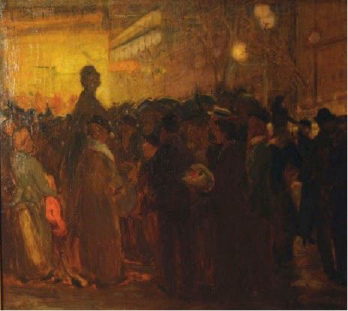
Theresa Bernstein, Suffrage Meeting, 1914, oil painting on canvas. The City University of New York
It was a conversation that the Declaration of Independence anticipated when it proclaimed “unalienable rights,” “Life, Liberty, and the pursuit of Happiness,” and “consent of the governed,” principles that, at that moment, did not extend to women. Over the past 250 years, women — leaders, creators, organizers, innovators, and changemakers — have fought to make these words real, and NAWA’s rich history of accomplished women artists includes those who have played meaningful roles in advancing the Declaration’s principles.
Theresa Bernstein (1890-2002) is a noteworthy example. A NAWA member in 1916, Bernstein belonged to a generation of women artists who had to struggle—not only for recognition but also for the mere chance to show the public their work. Bernstein’s work addressed the pressing issues of her time, including the fight for women’s suffrage, the plight of immigrants, World War I, unemployment, and racial discrimination.
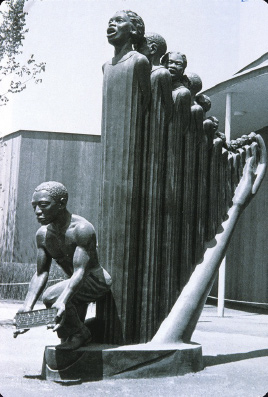
Augusta Savage, Lift Every Voice and Sing, 1939 (photo: public domain).
Augusta Savage (1892-1962), a NAWA member in 1934, was one of the first African-American members of the National Association of Women Painters and Sculptors. Her sculptures were intentionally about injustices she saw as affecting her race and gender. A NAWA member in 1926, Ethel Schwabacher (1903-1984) created the Birmingham series in the 1950s in response to the Civil Rights movement.
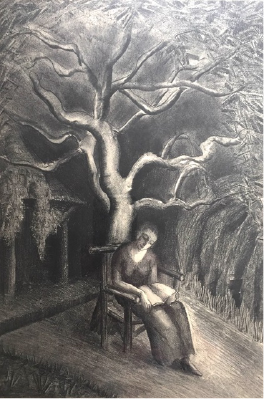
Edith Bry, Solitude, courtesy of Richard L. Field
Edith Bry (1898-1991), a NAWA member in 1934, whose style ranged from realism to abstraction, was noted by critics for her versatility, particularly her skill in oil painting, lithography, etching, drawing, watercolor, and wood carving. In 1938, she organized the sale of works donated by 130 artists to raise funds to support the Joint Distribution Committee’s efforts to help European Jews escape Nazi persecution. In 1940, when the Metropolitan Museum of Art put her Exiled on view, she defended the work, admitting that she intended the painting to convey a sense of finality and doom, but not to be propagandistic.
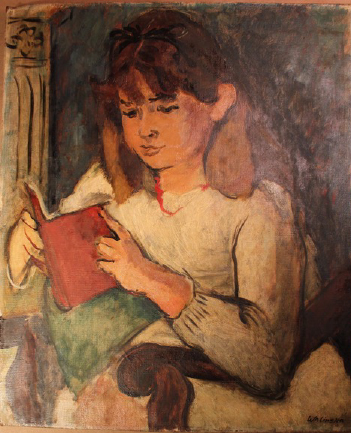
Anna Walinska, Portrait of Emily, courtesy of Atelier Anna Walinska
NAWA artists Louise Nevelson (1899-1988) and Anna Walinska (1906-1997), who joined NAWA in 1952, both addressed the horrors of the Holocaust. Nevelson created her profound Holocaust memorial work in the 1960s, using her signature black-painted wood assemblages to honor the six million Jewish victims. Walinska’s series comprises 93 paintings and drawings created from the 1930s through the 1950s that reflect on the tragedy of the Holocaust, displacement, and survival.
More recently, Faith Ringgold (1930-2024), Judy Chicago, and Judith K. Brodsky, all NAWA Honorary Vice Presidents, drew on personal autobiography to amplify struggles for social justice and equity. Ringgold used her own life and collective histories to document her life as an artist and mother. Chicago and Brodsky, both early leaders in feminist art, continue to advocate for women. Brodsky’s work makes us aware of what is happening to our environment, even as she renders an impending apocalypse in cheery hues.
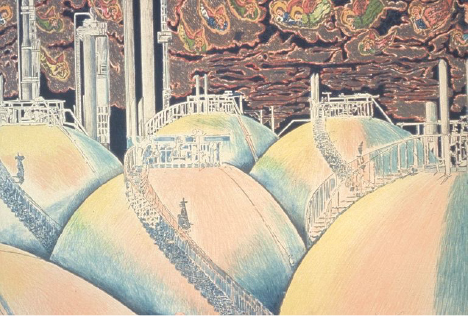
Judith K. Brodsky, Lamentation from the series, The Meadowlands Strike Back, Lithograph, 1989, courtesy of Judith K. Brodsky.
NAWA’s historical members add a rich layer of meaning to this exhibition, in which current signature members created works that reflect on the many ways women’s contributions resonate across time, inspiring future generations. At a critical moment, they are called upon to explore collective identity, civic voice, and the essential role of women in shaping democracy, ensuring that written history does not relegate women’s voices and achievements to a footnote. They are integral to its foundation, and viewing the varied ways our members express what they see, think, and feel—what they pay attention to—they foresee what can come next.
Sources
“Artists Aid Relief Work”. The New York Times. 1937-05-01. p. 157.
“Art of Edith Bry Causes Controversy by Critics”. Kingsport Times. Kingsport, Tennessee. 1953-11-22. p. B7.
Gail Levin (ed.) 2013.Theresa Bernstein: A Century in Art. University of Nebraska Press.
Regenia A. Perry (1992). Free within Ourselves: African-American Artists in the Collection of the National Museum of American Art (Washington, DC: National Museum of American Art in Association with Pomegranate Art Books, 1992.
https://en.wikipedia.org/wiki/Edith_Bry
https://jewishvirtuallibrary.org/jsource/biography/nevelson.html
https://thenawa.org/nawa-luminaries-anna-walinska/
https://thenawa.org/nawa-luminaries-augusta-savage/
https://thenawa.org/nawa-luminaries-ethel-kremer-schwabacher/
https://thenawa.org/nawa-luminaries-louise-nevelson/
https://thenawa.org/nawa-luminaries-faith-ringgold/
https://thenawa.org/red-carpet-nov-2024/
https://theresabernstein.newmedialab.cuny.edu/?attachment_id=2684