ARTIST AT WORK
by Tresa Thompson O’Connor

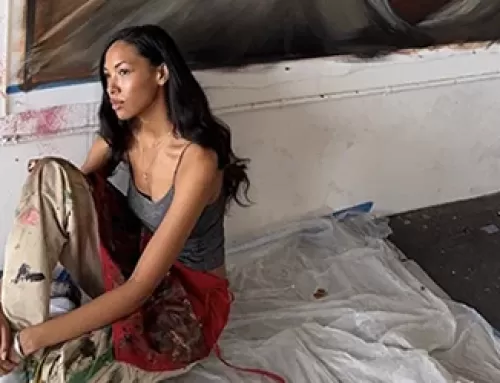
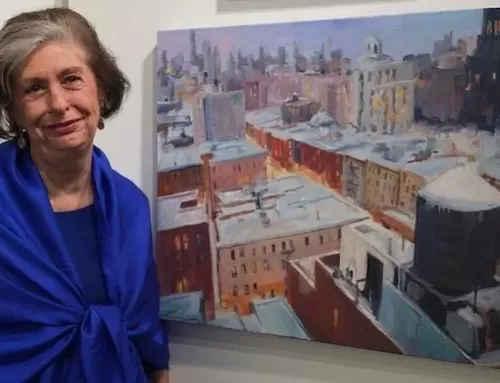
Tresa Thompson O’Connor at her recent exhibition, “Leaning Liminal”
I was about 9 years old, it was summertime, and I suddenly realized I was completely lost in the woods near my parents’ home. I panicked, feeling very small on the forest floor, and all I could hear was my pounding heart. I was seriously scared, also angry with myself for being unobservant and completely careless about my surroundings. Remarkably, I remembered a practice my mother used when she was uncertain or in fearful situations. Doing my best to recall what she shared with me, I sat down, closed my eyes, and began to count each breath, which balanced and calmed my mind. Thankfully, I found my way out of the woods, which marked the beginning of a study of ‘mindfulness’, something I’ve continued into this moment of my life.
When I’m working, particularly when I am engaged in excessive internal dialogue, perhaps doubting myself or my creative process, I rest for a moment and consciously revisit mindfulness meditations. “Leaning Liminal” especially, is the result of these practices. During the past 12 months, all my energy and most of my time have been dedicated to creating a new body of work for my most recent exhibit, “Leaning Liminal,” at New Editions Gallery in Lexington, Kentucky. I explored many forests throughout Appalachia, took thousands of pictures, and journaled. The exhibit lasted for two months, received good reviews, and nearly sold out, I’m pleased to say.
Now, I have a few moments to remember and reflect on events that have brought me to a more contented place in my work. Life has not always consisted of easy, predictable, or straightforward paths. In fact, the interruptions in my career timeline have been numerous and difficult. Like many women, my career was delayed by familiar obligations that commenced with caregiving within my family, chronic illnesses — months turning into years. In the relative freedom I now enjoy as a full-time artist, I hope I am also sufficiently sharing bits of love and wisdom gleaned from the histories of people whose lives I’ve touched as their histories touched upon mine.
I am a third-generation Appalachian artist and the first of my family to have earned advanced degrees. Before I was born, my grandfather would drive from West Virginia to Florida during the winter months where he would set up en plein air and sell paintings to tourists. By his return in the spring, he had amassed most of his annual income. My father, also very accomplished from a young age, was accepted into Carnegie Mellon (Carnegie Tech in those days, which included a college of Fine Arts), but World War II intervened. He continued drawing and painting after the war and throughout his life, but never professionally. Because my family loved art and its processes, I had consistent encouragement. They were also happy that I grew into a person who is confident as a camper, hiker, and amateur photographer.
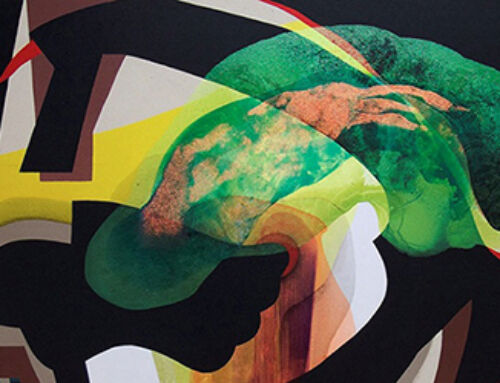
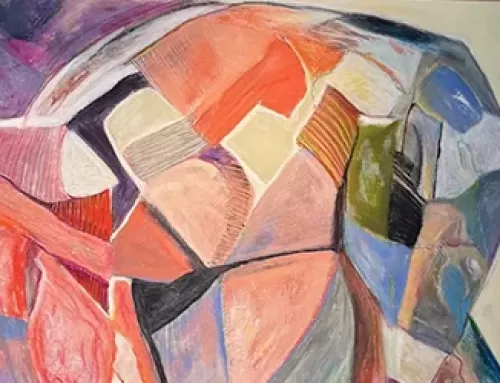
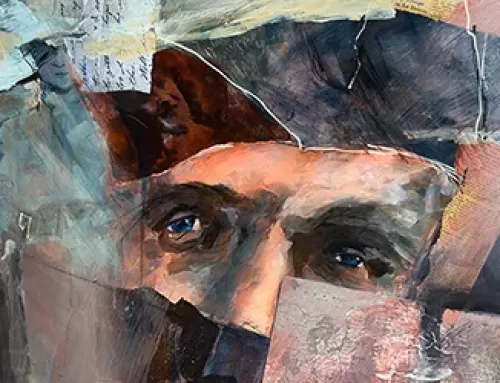
This affinity with nature has never changed and informs all my efforts as a painter. My current work is acrylic, which I often apply with brushes, fingers, stencils, rollers and other tools; then sand with a rotary sander — sometimes down to the gesso layer — eventually I seal it with an isolation coat. Working with an isolation coat is certainly a matter of personal preference. You can prepare your own recipes (see Google) or buy a product made by Golden simply called ‘Isolation Coat’. I use it because I need to preserve some of the effects of my sanding, as well as the details and patterns that sit in layers beneath the finished final surface of the painting. An isolation coat is deemed non-removable, can be painted over, and is the last layer prior to the application of a removable varnish. In my work, this process might occur many times and helps to create the multiplicity of visual layers of diverse, sometimes luminous minutiae present in Nature, all of which is very important to me — the lively tangle of life beneath our feet in fields and forests. For more about isolation coats, see here.
I especially enjoy reveling in vast spaces and using composition and color to express the details which I tend to refer to as ‘elementals’. The smallest indicators of particulates have within them, for me, the sense of being both lost and found, and I enjoy creating and seeing them. This is what I, as a child, could see so clearly. It was enlivening and beautiful to me. With that, and over time, there comes with this perspective a profound sense of stewardship about the environment and our climate. It will always be with me.
I hope viewers of my work might engage with the magic I experience in communion with Nature. My subjects are inspired and influenced by how I grew up, and now also include the in-between or transitional spaces and thresholds with which we emotionally resonate, especially as we move through new stages in our life experience. I crave the interesting uncertainty and the sense of quiet in these environments, which are usually empty of people but full of detail, movement and texture. These are the places I see when I close my eyes.
Tresa Thompson O’Connor is a painter with studios in Lexington, Kentucky and Neptune Beach, Florida. https://www.tresathompson.com