NEWS + MEMBER EXHIBITS
by Amy Schneider
The Artist’s Vision Recognized
The Metropolitan Museum of Art is hosting the first major U.S. retrospective dedicated to Finnish modernist painter Helene Schjerfbeck, covering her entire career. Seeing Silence is on view through April 5, 2026, at Gallery 964, one of the museum’s numbered gallery spaces situated within the main building at 1000 Fifth Avenue, New York City. Helene Schjerfbeck (b. July 10, 1862 – d. January 23, 1946) is celebrated as a pivotal artist who helped bridge traditional and modern art in Finland, making a lasting impact on the cultural heritage of the Nordic region. The exhibition is titled Seeing Silence to reflect the subtle, introspective qualities that define Schjerfbeck’s art.
A Journey Through Six Decades
Visitors to the show are greeted by the quiet power of Schjerfbeck’s artistic vision. Nearly 60 paintings are on display, each representing various periods of her remarkable six-decade career. The selection encompasses intimate domestic scenes capturing the subtleties of daily life and the compelling self-portraits that have become central to her enduring legacy.
Schjerfbeck’s art encourages contemplation of universal themes such as identity, resilience, and transformation through subtle, introspective scenes and self-portraits. Her style is distinctly different from that of June Leaf, the subject of an article in the October 2025 issue of NAWA NOW (#Schneider, #NAWA_NOW). Leaf explored the interplay between the mechanical and the organic and used inventive, surreal imagery to comment on the tensions and contradictions of modern life. Leaf’s art (Figuration → Abstraction → Assemblage) is bolder and more experimental, expressing ideas and emotions in a direct and visible manner.
In contrast, Schjerfbeck’s art (Realism → Modernism → Abstraction) is characterized by a more subtle exploration of emotion and introspection, often conveying depth and contemplation through a quiet, understated approach. Their differences reflect individually distinct artistic philosophies and personal journeys.
Schjerfbeck’s life experiences deeply influenced the subject matter of her paintings. Her early struggles with illness, including a hip injury and periods of isolation, fostered a reflective and introspective outlook. This is evident in her quiet domestic scenes and poignant self-portraits. Her talent was recognized at the very early age of 11, when she enrolled at the Finnish Art Society Drawing School. She then continued her studies in Paris, where her early works adhered closely to realistic representation and the traditional techniques taught in art academies. Her art was naturalistic, depicting subjects as they appeared in everyday life, with careful attention to detail, light, and anatomy.
Some well-known paintings from Schjerfbeck’s early years, which focus on technical skill and commitment to realism before she developed the more modern and introspective style that characterized her later career, include:
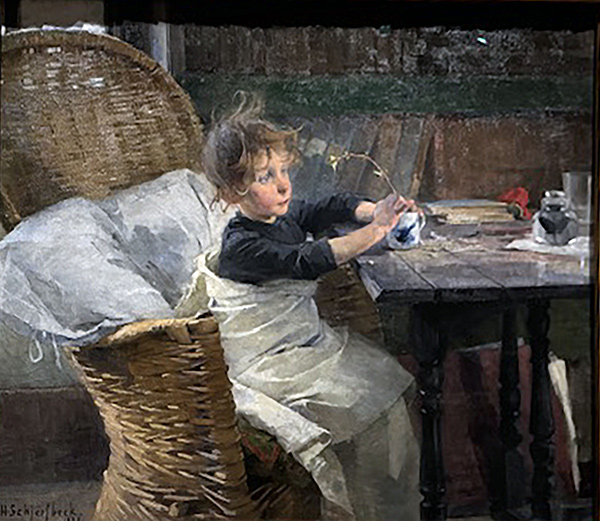
The Convalescent (1888). Oil on canvas.
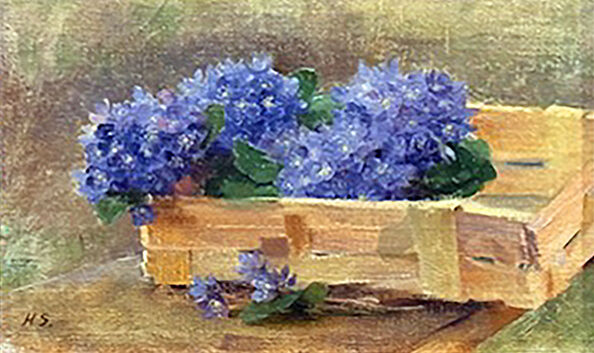
Blue Anemones in a Chip Basket (1892). Oil on canvas
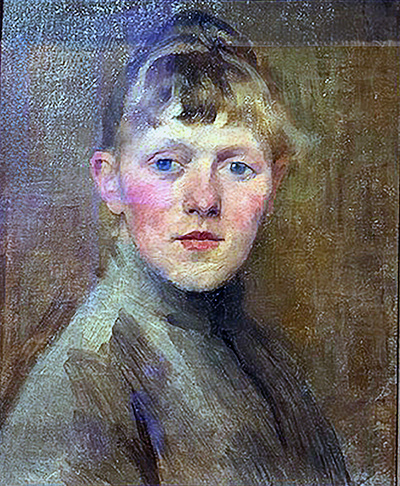
Self-Portrait (1895). Oil on canvas
“Landscape – The Manor House”, completed in 1901, represents a transition in Schjerfbeck’s artistic development. In this work, her increasing introspection and deepening connection to her surroundings become evident—a gradual transformation that would grow even more pronounced in her later works.
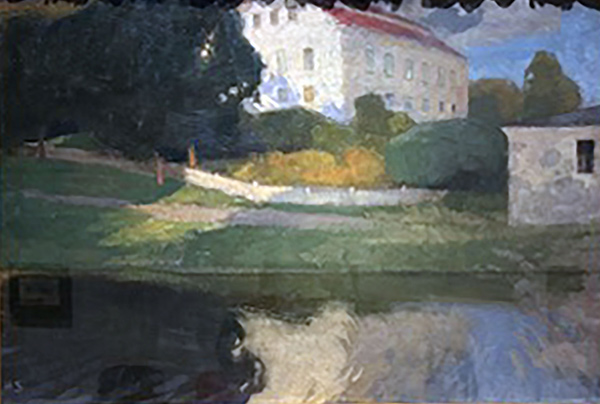
Landscape– The Manor (1901). Oil on canvas
Self Portraits
As Schjerfbeck matured, her art became increasingly personal; her self-portraits in particular offer a window into her inner thoughts and emotions, revealing her feelings and the ways she reflected on her own life. Her works are recognized for the way they chronicle Schjerfbeck’s evolving sense of self. They reflect her journey through both financial and personal hardships, including her role as the primary caretaker for her mother and the death of her father. These life challenges focused on psychological depth and self-reflection, which is especially evident in her work.
Compare her 1895 self-portrait, influenced by the Renaissance masters, with her later self-portraits, where her face is half obliterated and receding, reflecting vulnerabilities near the end of her life: These notable works include: self portraits painted in 1895, 1912, 1916 and 1944:
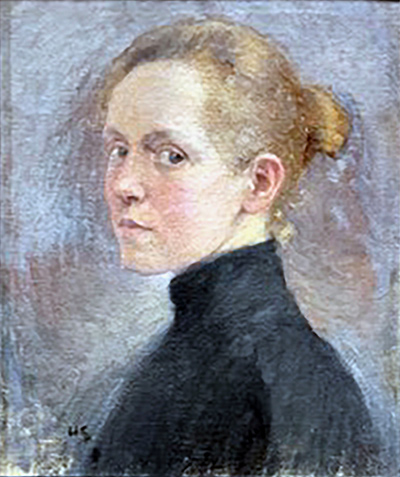
Self-Portrait (1895). Oil on canvas
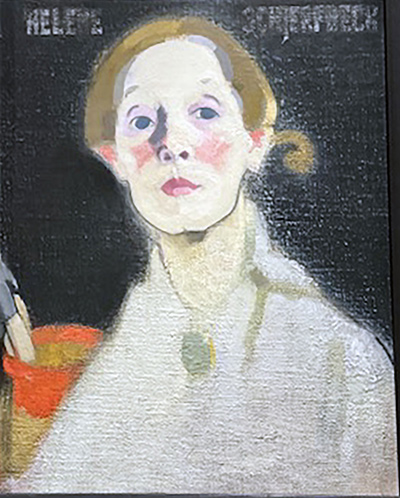
Self-Portrait (1916). Oil on canvas
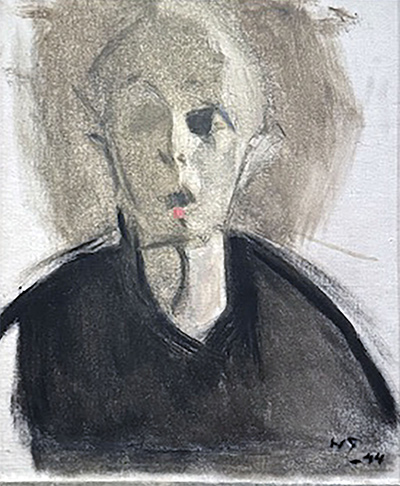
Self-Portrait with Red Dot (1944). Oil on canvas
In summary, Seeing Silence invites visitors to look beyond the surface and appreciate the power of what is unspoken or subtly conveyed in Schjerfbeck’s art. This approach is central to her artistic vision and is emphasized throughout the exhibition at The Met. The show offers a unique opportunity to witness the artistic evolution of one of Finland’s most celebrated painters—from her early commitment to realism, through her increasingly introspective self-portraits, to works that probe the complexities of identity, emotion, and the human experience.
Additional Information:
Official Museum and Exhibition Pages
- The Met’s Exhibition Page: Seeing Silence: The Paintings of Helene Schjerfbeck – The Metropolitan Museum of Art, the official page for the current exhibition, with highlights, curatorial essays, and related events.
- Finnish National Gallery / Ateneum Art Museum: https://ateneum.fi/en/helene-schjerfbeck/ The national collection of Schjerfbeck’s works, with biographical information and digital galleries.
Scholarly and Biographical Resources
- English-language Biography by Marja Lahelma: The First English-language Biography of Helene Schjerfbeck (Ateneum). A detailed scholarly biography available online.
- New York Times Article – January 4, 2026
https://www.nytimes.com/2025/12/30/arts/design/helene-schjerfbeck-met-museum.html
Art Databases and Image Collections - WikiArt: Helene Schjerfbeck on WikiArt. A large collection of her paintings with dates, titles, and brief commentary.