
BOOK REVIEW
by Roz Dimon
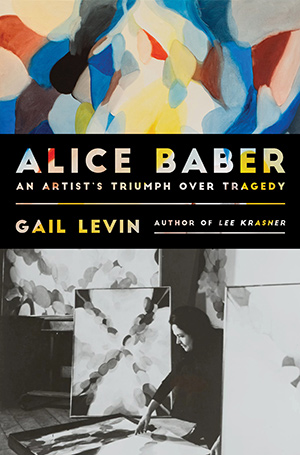
I loved this book. As an artist who has also navigated the ups and downs of the competitive scene of New York City and beyond, I felt huge empathy for and was inspired by Alice Baber’s journey — now made so alive in this book by Art Historian Gail Levin.
Levin places Baber’s experiences within the context and mores of her time, brilliantly interweaving the light that defined her life, her character, her paintings and even her death with her struggle to be seen in an artworld largely dominated by men. Beyond the 48 color plates and vivid descriptions of Baber’s illuminating work, Levin’s book is rich with fact-based anecdotes about her family life, her difficult marriage to her competitive artist husband, her support of other women, and her ever-curious and open mind — reflected in her art, her global travels, and readings of such countercultural historic giants as George Sand (a treasured tome on my bookshelf as well.)
I regret not having met Baber personally, arriving as I did in the city in 1981, the very same year as her death. But in a way I feel I have met her—from the colors of her kitchen wall, which she painted herself in the early days of her life in the Village (which Levin notes actually reflect the artist’s palette), to her original marks of light in her paintings, to her bold, seemingly indomitable spirit and endurance.
It is so good to experience both her unique life and her art coming alive through this book. It is good to know that although her paintings are in more than 50 museum collections from the Met to MoMa, ironically, they are just now coming back into the light.