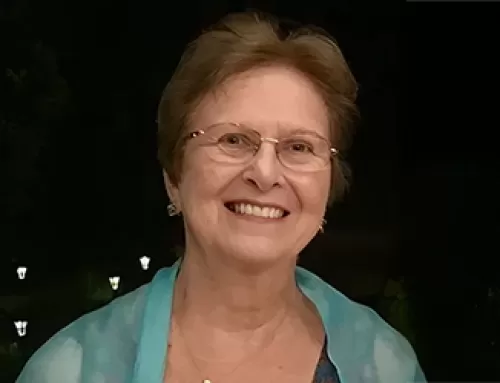

Roz Dimon

Susan Rostan
Featuring NAWA’s Susan M Rostan and Roz Dimon in dialogue
On one of February’s biting-cold days, Roz Dimon and I found warmth in a lively conversation about the politics inherent in art. We were responding to our notions about NAWA’s upcoming April exhibit, She the People, at the National Women’s Hall of Fame in Seneca Falls and a second exhibit at the Monroe Township Library in New Jersey. Both exhibits will celebrate the 250th anniversary of the Declaration of Independence. We decided to do some research and reflection, and to sit for a Zoom conversation for NOW. The following conversation, a condensation of two ensuing interviews, addresses our overarching question: Is all art political?
Susan: Let’s start from not the exact beginning, but a beginning: We were collaborating on a prospectus for the Monroe Township Library exhibit and focused on the following statements:
“Over the past 250 years, women leaders, creators, organizers, innovators, and change makers with practiced grit have expanded the meaning of democracy itself. Their creativity and perseverance continue to inspire us as we work toward a more inclusive, humane, and just society. We invite artists to honor this legacy and envision its future. What does it mean to you as an artist to carry forward, expand, or reimagine these founding principles? “
Our conversation then went to: How do we relate to this invitation as artists? Do we intentionally pursue this when we create art? And does this make our art political?
My knee-jerk reaction was not intentionally, not as a focus, not as a reason for making art. But certainly, I can’t ignore the fact that I’m an intelligent woman artist, troubled and inspired by the world around me. And given that, a reasonable person would assume that these things would enter into my subjective vision of the world.
We agreed this is true, but how far does it go? From there, I mentioned Sam Gillian’s argument that abstract art is inherently political because it challenges viewers to rethink their assumptions and understand difference. Often lacking overt, figurative socio-political imagery, his colorful, sculptural “drape paintings” of the 1970s challenged the established, rigid norms of painting. Not to mention that his success as a Black artist in the predominantly white, male-dominated art world was itself a radical political act.
I believe his perspective is that it makes us rightly question what we are seeing and what we are understanding. And that’s a political response to the world. Following in our discussion, you said to me, “Well, I consider myself a political person. I can’t help myself.” Am I quoting you correctly?
Roz: Yes, I am a political person.
Susan: Let’s talk about your Lincoln series, which was on exhibition at the Abraham Lincoln Presidential Library and Museum in Springfield, Illinois, and is now part of its permanent collection. I have seen the works presented in several different venues, have been following it, was intrigued by it, and then sat down one day and said to myself, Let me go through these images that you had posted because I’m not only curious about how you created them, but I’m curious about what they mean. And honestly, my first response was: Lincoln. Oh, boy, that brings a lot of baggage right now, because Trump has brought his self-comparison with Lincoln into the media on several occasions. And, like the flag, he’s tried to hijack Lincoln for his own uses, for his own self-promotion, as distorted as that seems to me. But I must not go there; I must look at the work as art.
My first reaction was the political association. In looking at the images, I thought, Roz has made what normally would be this very austere imagery of Lincoln as some mythical creature in our history, a country’s history, and made him so human. Looking at each of these images, I see human reactions. I see holding to what’s going on in the world, and some of them are almost like him saying, “Are you kidding me?” And others like he’s laughing at things that he’s seeing, contemporary things that he’s seeing, that we’re doing, that we’re thinking, that even we’re associating with him. I have such a different, more empathetic response to the imagery you created, which I never would have had before. It would have always been at a distance, even in the movies and documentation I’ve seen. It was always this very celebrated, quiet, and burdened human being. And you lifted that, and you evoked the DNA I could identify with.
Roz: I love that response. Art makes a dialogue in a language that maybe in some other language, you can’t have. I mean, everybody claims Lincoln. Trump likes Lincoln. As someone who’s got a universal man or woman about them, everybody claims him. These drawings are not posters like red or blue, but they are political. I’m political.
I voted because I had the right to and because I’m responsive to what’s going on in our country. But my whole mission statement with digital has been about touch and bringing people in, finding the humanness in that space. So, the fact that you looked at it that way is so interesting to me. Everyone’s probably going to have a different opinion, but each piece has a label on the back with a news quote from the day I created it, noting what was happening in the country at the time. And it ties his face to a more contemporary historical period. And honestly, his reactions were very much my own. I used his face to say, “What? You must be kidding!” He has so many faces in one, as we all do.
For example, Lincoln #15:

The label reads: LINCOLN #15 Go On, Again (12/30/20)
digital drawing fabricated to archival ink on sunset velvet rag paper; edition of 20. On the back:
POLITICO Playbook: McConnell to Trump: No thanks
AT THE MOMENT — which means as of before dawn this Wednesday morning — it doesn’t look like Senate Majority Leader MITCH MCCONNELL is eager to help President DONALD TRUMP get $2,000 direct payments into law.
https://www.politico.com/newsletters/playbook/2020/12/30/mcconnell-to-trump-no-thanks-491256
When I talk about this piece, I’m very careful with my audience. Look, I lean to the blue. But this is a man (Lincoln) whom both the red and the blue claim. And now red has become blue and blue has become red. So, we’re all purple. So, let’s talk about it. We’re a country with diverse opinions. And the more you hear about Lincoln, the more you understand he wasn’t just a little Pollyanna; he was a sharp politician. There are a lot of things he did that I questioned. But ultimately, we watched a person grow into their greatest self. That’s what he did. At first, he wasn’t anti-slavery. He was a politician who wanted to get elected, and he did. He did what he had to do.
Susan: Was communicating this part of your intention in creating the work?
Roz: Well, I had no intention to create it. I just saw this photo of Abraham Lincoln by Alexander Gardner. It’s a gorgeous, quintessential black-and-white from 1863.

Abraham Lincoln photo by Alexander Gardner, 1863. Library of Congress.
I printed it out in a little five-by-seven. And I just said, “God, look at that face, and all the stuff that was going on.” And I started pulling paper out and working digitally. I didn’t plan, like, “Oh, let me do a series of 19 Lincolns because Lincoln reminds me of …” That was your point. It was not conscious, not at all conscious. I responded to the world. And that seems to be my whole life in art.
Susan: If you look at a larger part of your body of work, would you describe your work as having political intentions?
Roz: Yes, and sometimes it’s very funny. It’s all about America. I was very fascinated by money. I mean, I would go into Duane Reade at the World Trade Center, and there were like 8,000 products for shampoo. Now there are a million. The commerce of America always intrigued me. I have one work I call Washington Pig, and it’s a critique and a celebration of capitalism.

Roz Dimon, WASHINGTON PIG, mid 1990s, digital painting output to trans cibachrome backlit by light, 36×48″, edition of ten.
Susan: Now you’re turning to a definition of political that encompasses commentary about our culture.
Roz: Oh, totally.
Susan: You’re bringing me to the next question: What is political art? I’m going to refer to Maria Brito, an art advisor, curator, and author based in New York, who wrote an essay titled All Art is Political. She had given a talk at Columbia, and at the end, one of the undergraduates asked, “When did art become so political?” And she responded that “It always has been. All art is political, even when it doesn’t scream activism or protest, even when it’s a serene landscape or an abstract painting of nothing in particular, because art at its core is about choices. Who gets to make it? Who gets to show it? Who gets to own it? These are all political questions.”
Roz: I think that is so interesting, because lately, I can’t just go out there and paint a flower right now, and I found myself being kind of critical of like, oh, these people, they’re just painting beauty, and that made me take a step back and think, hold on a minute. When you think of every creative act as one of ‘I’m going to keep living and seeing the wonder in the world,’ we are still living in a world right now where the news is trying to get us.
Susan: Maria Brito’s essay cites George Orwell’s statement that “all art is propaganda” and argues that even art that appears neutral carries ideological weight, whether it reinforces the status quo or challenges it. From this perspective, art is never just about aesthetics. It reflects power, identity, and control, whether the artist intends it or not. Brito adds that “A work of art doesn’t have to depict war, injustice, racial issues, or activism” to be political: “art that claims to be apolitical is often the most revealing.” It reflects what a culture considers safe, acceptable, and worth preserving.
One could argue that, like those artists among us who are so upset about what’s going on in the world, we can keep the stress down and stay centered by focusing on nature, the immediate world around us, or nonobjective abstractions. Their art is 180 degrees from where their emotional response to the world would otherwise be. And yet this screams, “I need to stay focused because I can’t endure who I will be or what I will be thinking about if not for my studio practice, the work itself.”
Roz: Yes, absolutely. Art that draws you in as an artist, or to another artist’s work, is art that makes you want to look.
Susan: It draws you in. But that is the political aspect of it. I believe the baggage that it carries is that it is a distraction. The more you can keep yourself looking, thinking, and exploring, connecting with this imagery, the longer you are away from that.
Roz: You mean art is a way to save yourself?
Susan: Well, yeah.
Roz: It’s true. People look at art, and they don’t even know how to express what they’re feeling. You’re going beyond just, “Oh, this is a nice blue color.” You’re going beyond “How did they make this?” to what is going on in the human psyche that can bring us together through art, especially for women. We are asking, “What are NAWA women saying at this moment, and is it all political?
Susan: Right.
Roz: Even your piece you recently did, Storm on Storm. I do think a piece should live on its own, but art can really benefit from explanation. When you told me a little about what drew you in and inspired you, and what your thoughts on that piece were, I thought, “Oh, yeah.” All you did was talk about it without me seeing the painting, and I was interested.
Susan: That piece came about in the midst of the lives taken in Minneapolis after our initial discussion about whether all art was political. In a climate, both political and weather-related, in which media owners cautioned their weather forecasters not to mention the danger of ice on the roads, I went up to my studio to clear my head. I was thinking: This is my sanctuary. My studio is my safe place. And oh my goodness, we have a snowstorm. I looked out the window and couldn’t help but connect with the beauty of the snow, letting it inspire me. And yet, as I started working with the colors of the snow and the shadows cast by the light, there was a very intuitive response to what I was putting down. I was in dialogue with the canvas, and I started bringing in the colors I needed in that moment, colors from another work that I had simultaneously been working on, but that happens all the time. It was one of those wonderful opportunities to have unmolested time to work and just let these energies play out without having to stop and say, “I’ll come back to this.” And I became aware of that. I thought, OK, I could take a break. The paint’s very wet, so it means working wet-in-wet. But I needed to stay with it a little bit longer. And when I had finally exhausted myself, stopped, and stepped back, I saw this submerged imagery. It was fire and aggression beneath a layer of softness, the energy expanding from the sky to the snow to the surface. And that’s when I thought, Oh my God, it’s a storm on a storm. The emotions of Minneapolis had seeped into my work, even as I focused on the beauty of the snow. It happens that way for me: successful work can hold up a mirror and reveal my own truths, surprising me with its authenticity.

Susan M. Rostan, Storm on Storm, oil on canvas, 40 x 30, 2026.
Roz: More and more analysis shows that the things affecting and changing us now have been in the works since, like, the late seventies. And I think that’s what Heather Cox Richardson is arguing.
Susan: I just read an essay by her which had to do with her observation that right before some devastating upheaval in a government, or it could be a society, there is a thought that occurs, that there’s somebody out there who can fix this. Richardson argues that if you don’t follow up on this instinct to do something yourself, and if people don’t react to events by acknowledging they have to act rather than leaning on the belief that somebody else will fix it, there will be a devastating outcome. For me, my art becomes an act of defiance.
Roz: That’s really interesting.
Susan: I think about the women who have protected our democracy, who have fought for our liberties, and didn’t assume somebody else was going to be there to fix things for them, for us. They assumed that it was up to them to play a part. And I think as women artists, we do this, intentionally or not. Our image of the world is political. This is a perfect place to end because we’ve come full circle.
Roz: That’s great. You wrapped it right back into the 250th anniversary.